
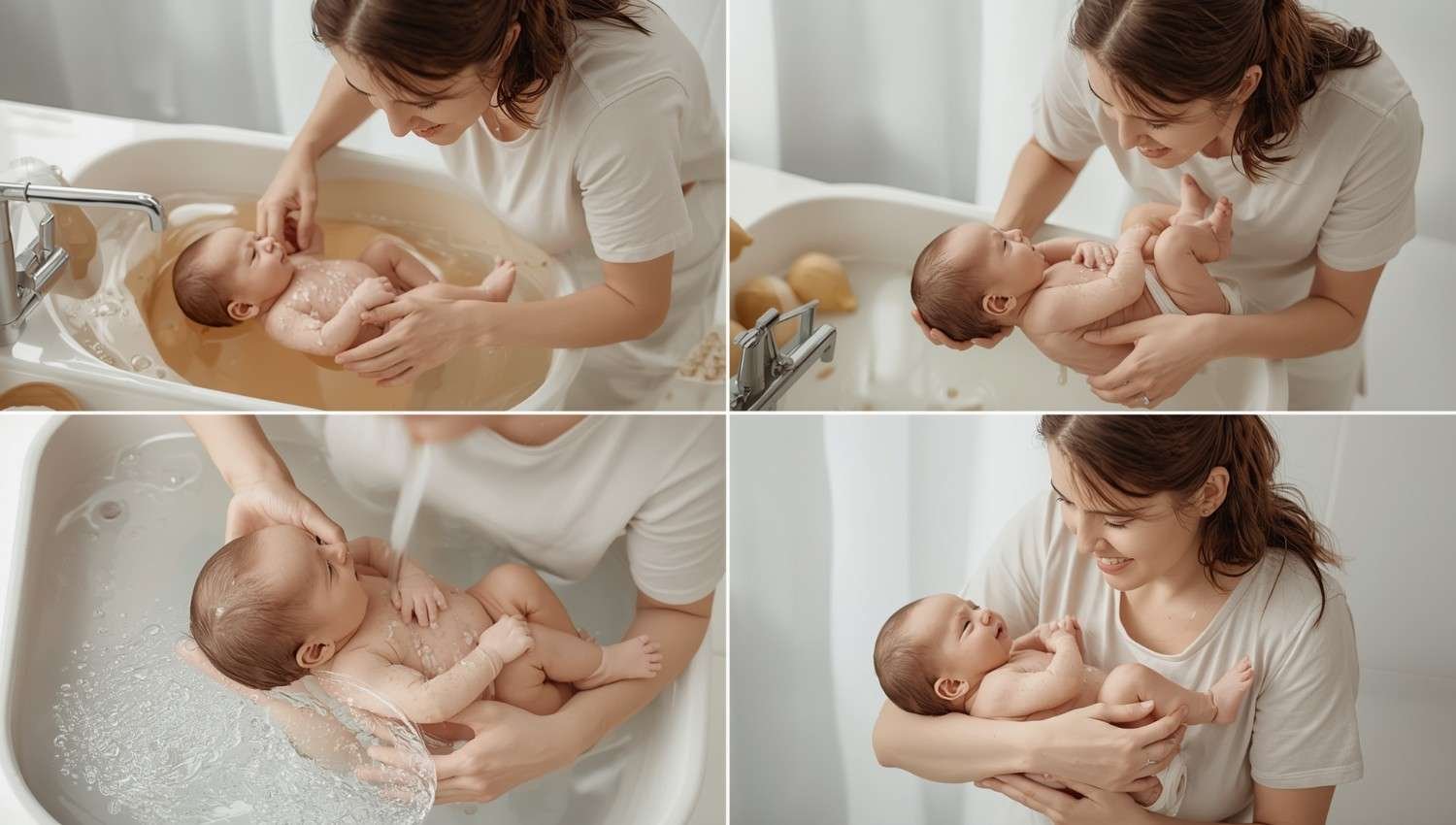
A Warm Beginning: Discovering the Beauty of Bath Time
The newborn bath is more than just bathing—it’s an act of care that blends hygiene, safety, and family connection into a moment of pure tenderness. When soapy water meets delicate skin, parents often feel a mix of awe and responsibility. In my own experience guiding new families, I’ve seen how simple adjustments—choosing gentle cleansers, maintaining proper temperature, and handling a crying baby with comfort—can turn uncertainty into calm. The baby’s fragile barrier needs protection, not just from soap, but from environmental stress. When done right, this routine becomes an expression of love, cleanliness, and skin health, helping the child relax and even improving sleep rituals through touch and rhythm.
Every part of the process carries meaning—from observing the water’s touch to creating a warm environment filled with joy and bonding. This gentle ritual supports the baby’s microbiome, nurtures well-being, and teaches Families that each bath can be both science and reassurance in motion. With baby-friendly products, mindful gestures, and small acts of discovery, the bath becomes not just care, but connection—a time of warmth, comfort, and shared journey in your home, guided by nurturing advice and heartfelt strategies.
The Perfect First Bath: When to Begin and What to Know
A newborn bath is a delicate balance between protection and discovery. For parents, understanding a baby’s skin—thin and vulnerable to microbial threats and environmental irritants—is essential. Experts, including the World Health Organization (WHO), recommend delaying the first wash to preserve the vernix caseosa, nature’s built-in moisturizer and antibacterial barrier. This helps regulate trans-epidermal water loss, supports skin barrier function, and safeguards the baby’s developing microbiome and immune system.
From my own experience, the first bath isn’t just about cleanliness—it’s about timing, comfort, and confidence. Wait until the umbilical cord stump and any circumcision areas heal to prevent infection or discomfort. Consult your pediatrician if you have health concerns or a premature baby. Each family’s routine and environment may differ, but the goal remains the same: creating a gentle, memorable start to your baby’s healing journey.
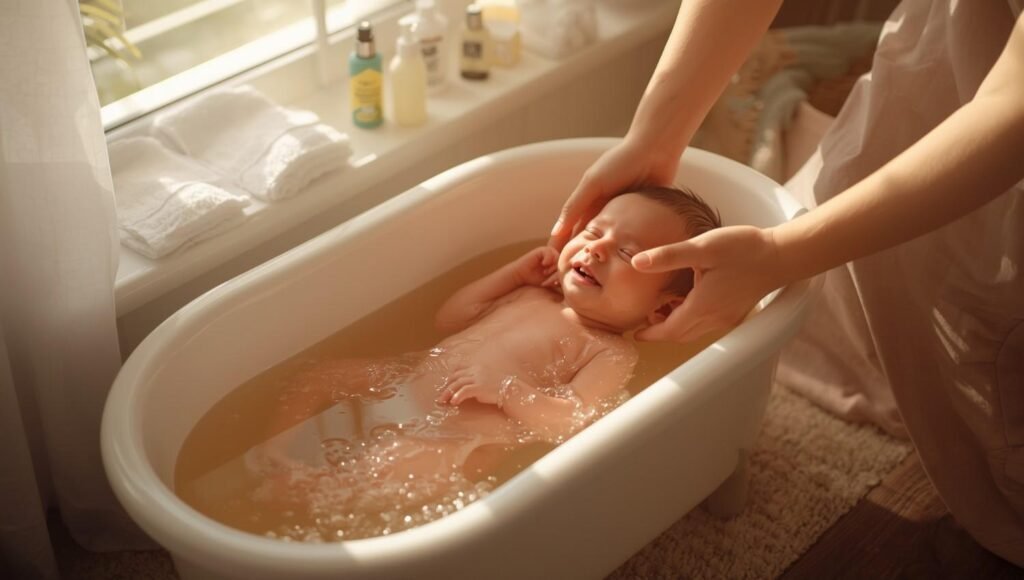
Pro Tips for Easier and Safer Baby Baths
1. Prepare Everything First:
Before you begin, have all your essentials within arm’s reach — baby soap, a soft towel, a clean diaper, and fresh clothes. This helps maintain smooth supervision and prevents you from leaving your baby unattended, even for a second. Keep all items organized on a nearby surface or a small bathing station. Being prepared means the bath flows calmly and safely, without interruptions or stress for either of you.
2. Keep the Room Cozy:
Your baby’s comfort depends heavily on the room temperature, which should stay around 24–27°C. Babies can easily feel cold, so ensure the environment is warm but not stuffy. Close windows to block drafts, and if needed, use a gentle heater for extra warmth. A stable temperature helps your little one stay calm, relaxed, and cozy throughout the bath.
3. Check Water Warmth:
Always test the water’s warmth before bathing your baby. Use your elbow or wrist, as these areas are more sensitive to heat than your hands. The water should feel pleasantly warm — around body temperature (37°C) — never hot or cold. This simple safety check helps prevent accidental scalding or discomfort, ensuring a secure start to bath time.
4. Pick the Right Time:
Timing matters more than you might think. Choose a calm, relaxed part of the day — when your baby is neither hungry nor overly tired. Avoid bathing immediately after feeding, as it can cause discomfort. Many parents find evening baths help their baby unwind and sleep better, while others prefer a bright morning routine for alert playfulness. Follow your baby’s rhythm to create a soothing routine that works best for your family.
5. Start with Sponge Baths:
For newborns, a sponge bath is the safest option until the umbilical cord stump falls off and heals completely. Use a soft washcloth dipped in warm water to clean the baby’s face, hands, and diaper area. This approach keeps the skin clean without full immersion, helping to protect delicate areas from infection and irritation. A gentle cleanliness ritual also builds your confidence before moving to regular baths.
6. Support Securely:
Your baby feels safest when held with confidence. Always cradle the head and neck with one hand while supporting the body with the other. Keeping a firm yet gentle grip prevents slipping and ensures comfort and confidence for both of you. Many parents find it helpful to use a bath support or infant seat designed for safety during early baths.
7. Use Gentle, Fragrance-Free Products:
Newborn skin is delicate and absorbs substances easily. Choose gentle, fragrance-free baby soap and shampoo to avoid irritation. Avoid products with harsh chemicals or strong scents, as these can dry out your baby’s skin. Prioritize natural ingredients and skin protection — a little goes a long way in maintaining healthy, soft skin after every bath.
8. Don’t Miss the Folds:
Babies have adorable rolls that require extra care. Gently clean areas like the neck, armpits, and diaper region, where moisture tends to accumulate. Use a soft cloth and take your time to reach every crease. Proper cleaning prevents irritation, redness, and rashes, especially after warm days or diaper changes.
9. Communicate Constantly:
During the bath, your presence and voice offer reassurance. Maintain eye contact, speak softly, or hum to keep your baby engaged. This soothing voice builds bonding moments and reduces anxiety. Bath time isn’t just about cleanliness — it’s a conversation of touch, tone, and trust that strengthens your emotional connection.
10. Dry with Care:
Once the bath is over, immediately wrap your baby in a soft towel to retain warmth. Gently pat rather than rub, paying special attention to creases and folds where moisture can hide. Ensuring every spot stays warm and dry prevents rashes and keeps your baby feeling secure. A calm, cozy ending sets the tone for comfort, sleep, or cuddling — the perfect close to your bath ritual.
Detailed Guidance

Essential Bath Tools Every Parent Should Have Ready
Before the first splash, preparation ensures both safety and comfort. A baby bathtub with a contoured shape provides a secure space, while soft washcloths and hooded towels protect sensitive skin. Opt for hypoallergenic, fragrance-free baby soap and shampoo to keep delicate skin and hair clean without irritation.
Gather a clean diaper, clothing, and a water pitcher or rinse cup to make the process smooth and joyful. A calm, nurturing environment turns the bath into a cherished ritual of bonding and cleanliness. As I often tell new parents, having the right bathing tools transforms bath time from a task into an act of love.
Bath Frequency: Finding the Right Balance for Your Baby
A newborn bath doesn’t need to happen daily—science supports moderation. For most healthy newborns, bathing two to three times a week maintains hygiene without stripping essential oils, preventing dryness, irritation, or infant eczema.
Still, every family and baby differ. Observe cues like redness or flaking, and adjust your routine for comfort. Some little ones enjoy a warm evening bath, while others thrive in a morning routine. Avoid bathing right after feeding or during hunger to prevent distress—the goal is to make this moment soothing and personal.
Creating the Ideal Bath Space: Warm, Safe, and Serene
For a stress-free bath, preparation is everything. Maintain a stable room temperature (around 22–25°C) and check water temperature (near 37°C) with a bath thermometer or your wrist. Keep the environment draft-free and calm.
Have all supplies—infant bath tub, washcloth, mild cleansers, hooded towels, and non-slip mat—within arm’s reach. According to pediatric guidelines, water depth should be under 5 cm to prevent drowning risk. Constant supervision ensures a cocoon of safety, turning bath time into a secure, heartwarming routine for both baby and parent.
Bathing with Care: Guide for Parents
Start by confirming the water temperature, then gently undress your baby, keeping them wrapped in a towel to avoid chills. Provide head and neck support, and cleanse using a washcloth or your hand—beginning with the face and neck folds, moving to the diaper area last to prevent cross-contamination.
Limit immersion to 5–10 minutes to prevent dryness or temperature fluctuations. Afterward, dry thoroughly, especially in skin folds, to reduce the risk of rashes or infection. If the umbilical cord stump remains, use a sponge bath and keep the area dry—your gentle attention ensures a safe and loving experience.
Transforming Bath Time into Calm Connection
Not every baby enjoys their first bath—crying or flailing is common. Soft lighting, a soothing voice, and gentle eye contact can ease tension. A warm washcloth over the belly mimics amniotic warmth, bringing comfort and familiarity.
Playful bath toys or calm music can help create security and curiosity. Experiment with timing—some families find bedtime baths promote better sleep, while others prefer the freshness of morning. Each moment becomes an opportunity for emotional connection and calmness.
Choosing the Right Bath Products: What Science Recommends
When selecting bath items, follow the less-is-more philosophy. Use fragrance-free, hypoallergenic cleansers that maintain the skin’s pH balance and minimize allergic reactions. Choose tear-free shampoos recommended by pediatricians and dermatology societies, avoiding products with sodium laureth sulfate, dyes, or perfumes.
On non-bath days, try “top-and-tail washing” — cleansing the face, hands, and diaper area with a washcloth to maintain hygiene without overexposure. This approach respects your baby’s skin health and emphasizes a gentle, evidence-based touch.
Avoiding Bath Time Mistakes: Medical Tips that Matter
Common missteps include water temperature errors, using harsh family products, and a lack of supervision. Even seasoned parents can overlook simple details like checking for scalding or cold water variations.
Never leave your baby unattended—even briefly—as accidents can happen in seconds. Regular verification, careful prevention, and consistent safe bathing habits are the best forms of protection.
Understanding Baby’s Skin: A Scientific Perspective
Newborn skin is thinner and less keratinized, containing more water content and natural oils. The vernix caseosa acts as an emollient, sealing in hydration and protecting the developing microbiome.
Avoid excessive cleansers or those with surfactants, as they can disrupt the skin’s natural barrier and cause dermatitis. For dryness, use an unscented, dye-free moisturizer after the bath. If eczema or sensitivities persist, seek a pediatrician’s guidance for safe, hydration-focused care.
Navigating Special Bathing Needs and Cultural Traditions
Every baby’s temperament is different. Some react with anxiety, while others find warmth and predictable touch deeply soothing. Simple adjustments in parental speech, water temperature, or timing can turn resistance into calm.
For cradle cap, use a soft brush and gentle shampoo once or twice weekly. Respect family rituals and cultural adaptation, but always uphold safety standards—especially for premature or fragile infants, where healthcare professionals should guide the process.
After the Bath: Creating Routine and Family Bonding
Wrap your baby in a towel, ensuring all skin folds are dry. Change into clean clothes and a fresh diaper, and introduce massage, swaddling, or soft singing for a peaceful transition.
A consistent routine fosters comfort and family bonds. Involve siblings by assigning small roles, like handing over a towel—these shared rituals build connection. Monitor for redness, rashes, or swelling, and seek medical guidance if symptoms persist.
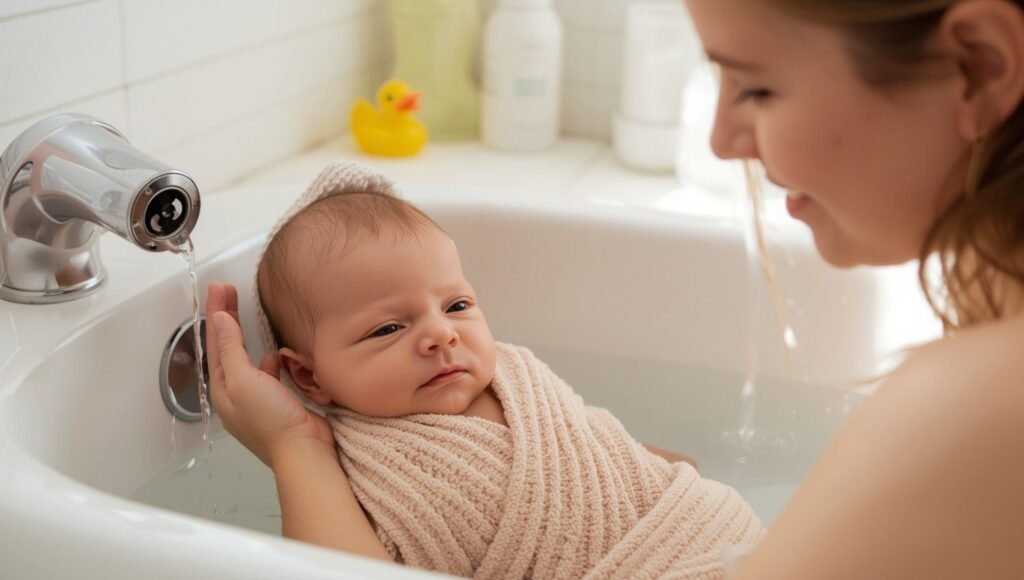
FAQs
Can I bathe my newborn before the umbilical cord stump falls off?
Avoid immersing your newborn in water until the umbilical cord stump has fully healed. Stick to sponge baths using a damp cloth for the face, hands, neck, and diaper area.
If the cord area becomes wet, gently pat it dry. Watch for redness, swelling, or discharge, and contact your pediatrician for guidance—especially for premature babies or those with slow healing.
How do I clean a newborn’s hair and scalp?
Clean your baby’s hair and scalp with warm water and a washcloth. For cradle cap or grime, use a small amount of mild, fragrance-free shampoo. Gently wipe, rinse, and brush softly to loosen flakes and prevent dryness.
There’s no need for daily shampooing—once or twice weekly is enough. With time, this small act becomes a moment of quiet connection between parent and child.
What to do if my newborn cries a lot during baths?
A crying baby during bath time is completely normal. Adjust water temperature, use a wet washcloth for comfort, and speak or sing soothingly throughout the process.
Some babies prefer evening baths before sleep; others enjoy morning routines when alert. With patience, gentle adjustments, and parental reassurance, the bath soon becomes a calm, familiar experience.