
The Gentle Story Behind Every Strand
For many parents, the first sight of their baby’s head, covered with soft fuzz or sometimes complete baldness, brings both delight and curiosity. Whether it’s silky curls, uneven tufts, or tiny bald patches, baby hair tells a story of early development and individuality. Some newborns arrive with thick locks, while others are as bald as a bowling ball—and both are perfectly normal growth patterns. The secret lies beneath the scalp, in those tiny follicles that begin forming during pregnancy, responding to hormone shifts, nutrition, and even genetics. I often remind new parents that what seems like a fleeting stage—the soft strands, the gentle texture, the playful bedhead—is part of a natural process that blends science, beauty, and the quiet art of baby care.
Caring for your infant’s scalp doesn’t require complex routines—just awareness and affection. Regular scalp care and light touch stimulation can encourage hair growth, while a healthy scalp ensures comfort and resilience. In many cultural traditions, gentle oiling or massaging isn’t just about appearance, but about nurturing, comfort, and celebrating the diversity of every child’s hair cycles and color, whether black, blond, brown, or red hair. With simple daily gestures, patient observation, and the right tips and tricks, you’ll discover that baby hair—those soft strands of promise—is less about worry and more about joy, variation, and the wonder of growing up.
A Baby’s First Crown: What to Expect at Birth
Every baby’s hair at birth tells a different story. Some babies are born with thick, dark locks, while others emerge completely bald. This variation is completely normal and largely influenced by genetics. During pregnancy, fetal hair growth begins between 9 and 12 weeks of gestation, and by 18 to 20 weeks, the scalp is often covered in fine hair. However, this early newborn hair—called lanugo—is temporary. Many infants shed this fine layer 8 to 12 weeks after birth as their hormone levels change and new hair cycles begin.
Inside the womb, high hormone activity boosts hair growth, but after delivery, these hormones drop quickly, often resulting in hair loss or patchy baldness. This process, known as telogen effluvium, is a natural transition. By 6 to 12 months, most babies begin to show signs of regrowth, though some may take until age 2 or 3 to develop a full head of hair. This is part of the natural rhythm of development, and no cause for worry. I often remind parents that these differences highlight the beautiful diversity of early growth, not a sign of poor health.

Nurturing Growth Naturally: Gentle Steps That Work
The journey from soft strands to fuller hair growth can be supported with care and patience. Coconut oil, rich in vitamin E, nourishes both the scalp and follicles. Regular application improves blood circulation, adds shine, and helps prevent hair loss. Choose organic or extra-virgin oil, gently massage it into your baby’s scalp, and let it sit for 15–20 minutes before rinsing. This small ritual can also help soothe cradle cap and strengthen follicles.
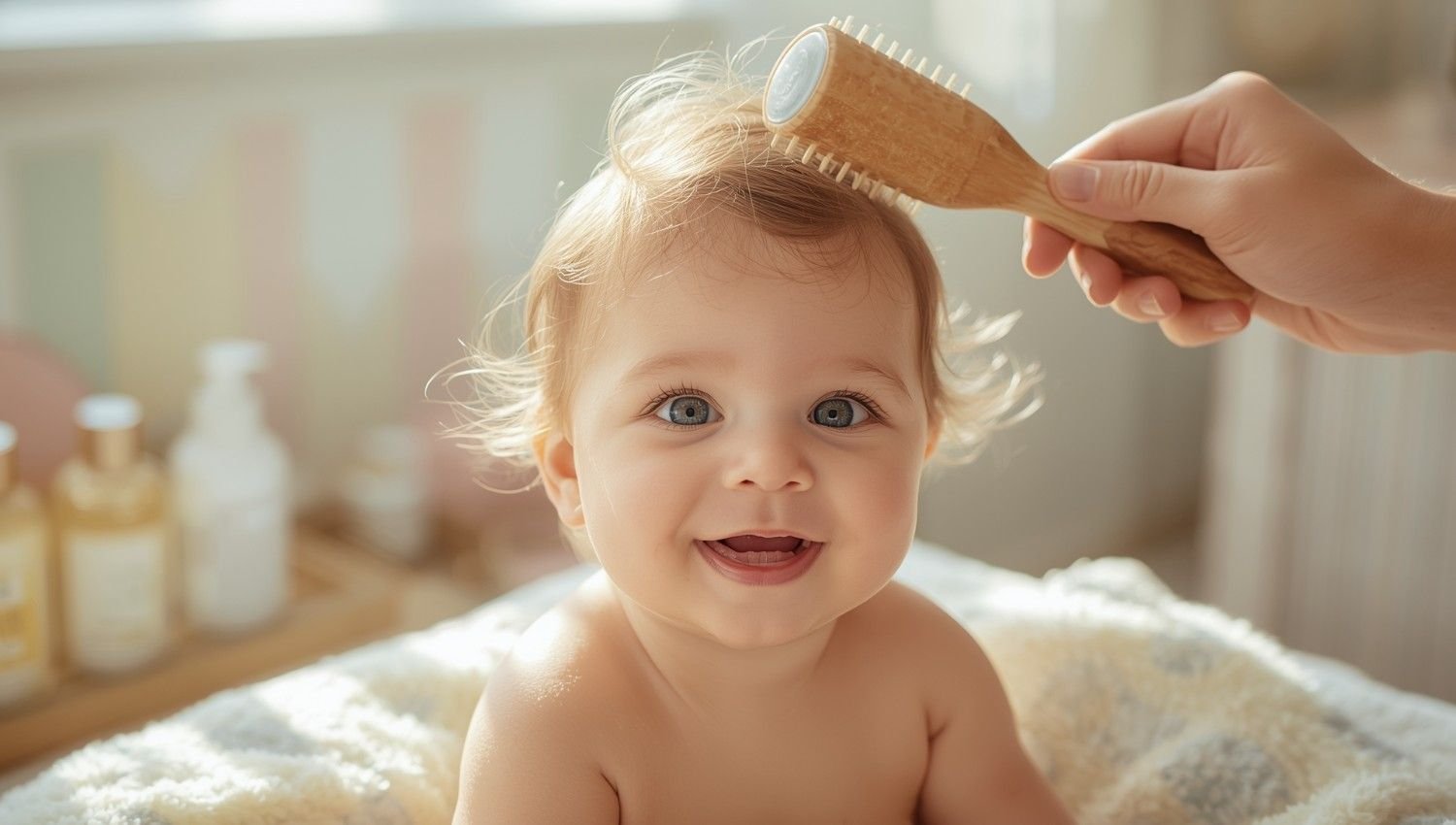
Equally important is brushing your baby’s scalp. Gentle strokes with a soft brush or your fingertips not only help with blood flow but also provide relaxation. Many babies find this touch calming—it’s not uncommon for them to fall asleep during these sessions. Light stimulation of the scalp encourages healthy hair cycles while removing dry skin and flakes. These simple daily gestures of nurturing care often make a lasting difference in your child’s comfort and appearance.
Keeping It Clean: Shampoo, Conditioner, and Routine
While some parents fear overwashing, regular shampooing—every 2 to 3 days—keeps the scalp clean and encourages healthy growth. Choose a tear-free baby shampoo and use lukewarm water. Cleanliness helps prevent dryness, which can slow down hair development. Once your baby’s skin adjusts after the newborn phase, you can increase bath frequency slightly to maintain hygiene and moisture balance.
For babies with textured or curly hair, a hair conditioner can make a significant difference. It restores moisture stripped by shampoo and reduces breakage. Apply a small amount of kid-friendly conditioner, leave it in briefly, and rinse with warm water. Conditioners are especially useful for baby hair that tends to tangle easily, ensuring strands remain soft, flexible, and full of shine.

The Art of Gentle Drying and Detangling
After each wash, handle your baby’s hair as delicately as possible. Use a soft towel to pat it dry rather than rub. Rubbing can damage fragile follicles and cause breakage. A gentle drying technique locks in moisture and keeps the scalp supple. This is particularly important for babies with fine or curly hair, as rough handling can lead to tangles and split ends.
When detangling, start from the ends and slowly work upward. A soft brush or wide-tooth comb is ideal. This daily routine keeps knots from forming and encourages smoother, more even growth. For curly textures, applying a few drops of natural oil before brushing can help minimize friction. These moments of soft grooming also deepen your connection—it’s more than care, it’s a tender ritual of love.
Feeding the Follicles: Nutrition for Stronger Hair
Beautiful baby hair starts from within. Nutrition plays a crucial role in supporting healthy hair growth. Once your child begins solid foods—typically after six months—include meals rich in vitamin A, B vitamins, iron, protein, and zinc. Foods like butternut squash, pumpkin, carrots, mango, beans, eggs, and leafy greens supply the essential nutrients that fuel the follicles. These nutrients boost blood circulation, delivering oxygen and nourishment to the scalp.
For breastfeeding mothers, your own diet directly impacts your baby’s development. Consuming balanced meals with adequate omega-3 fatty acids and vitamin D can strengthen your baby’s hair texture and resilience. Remember, even small dietary shifts—such as adding a spoonful of avocado or a serving of whole grains—can support long-term hair health and overall well-being.
The Power of Play: Tummy Time and Hair Protection
Daily tummy time isn’t just about motor skills—it also benefits the baby’s hair. Babies who spend much of their time lying on their backs often develop bald patches due to friction. By encouraging short periods of supervised tummy time (3–5 minutes to start, extending to 30 minutes daily), you allow the scalp to rest and reduce hair loss from rubbing. This position also strengthens neck and back muscles, helping your little one reach important developmental milestones.
While tummy time promotes growth, always ensure safe sleep by placing your baby on their back at bedtime to reduce the risk of SIDS (sudden infant death syndrome). Alternating between back and tummy positions throughout the day creates the perfect balance between safety and scalp care.
What to Avoid: Common Mistakes That Slow Growth
In caring for your baby’s hair, less is often more. Avoid using tight hair ties or clips that pull on delicate strands and strain the follicles. These can lead to traction alopecia, a form of hair loss caused by repeated tension. Instead, opt for silk headbands—soft, breathable, and gentle on the scalp. They not only look adorable but also protect against breakage and irritation.
Equally important, skip rough towels, chemical products, and adult hair care formulas. Babies’ skin and scalp are far more sensitive. Stick to pH-balanced, fragrance-free products to maintain moisture and prevent dryness. The golden rule? Keep everything mild, simple, and baby-safe.
The Science Behind Baby Hair: Biology, Genetics, and Hormones
Behind every tiny strand lies a remarkable story of biology, genetics, and hormones. The hair follicles form during the second trimester, creating a blueprint for lifelong hair density. The soft, fine villus hair present at birth differs from the thicker terminal hair seen in adults. Around the 20th week of gestation, a protective layer called lanugo appears—this fine covering insulates and protects the fetus before being shed and replaced by the delicate newborn hair we admire.
After birth, as maternal hormones decline, many babies undergo telogen effluvium, a natural shedding process that clears space for stronger growth. These hair cycles are an intricate dance of science and physiology—and while they vary from child to child, they all lead to the same outcome: a new phase of healthy development.

Adapting to Texture: Embracing Natural Differences
Every child’s hair texture is a masterpiece of genetics and culture. Whether straight, wavy, curly, or coily, each requires a different approach. Straight or wavy hair benefits from gentle washing two to three times weekly, minimal brushing, and little product use. Curly or coily hair, on the other hand, needs more hydration—less frequent washing, more conditioning, and a touch of natural oil to retain moisture.
Avoid excessive styling or over-brushing. For families from diverse cultural traditions, baby hair is more than an aesthetic—it’s a symbol of identity and belonging. Gentle styling practices like light braiding or oiling, when done with care, help celebrate individuality while keeping the scalp healthy.
That First Haircut: When and How to Begin
Deciding when to give your baby their first haircut can feel momentous. Some parents wait for special occasions; others trim as soon as bald spots appear. The ideal time usually falls between 6 and 12 months, when your child’s hair becomes thick enough to manage. Use rounded-tip scissors for home trimming, and only cut small sections at a time. If your baby is restless, consider visiting a children’s salon with experienced stylists.
Many believe a haircut jump-starts growth, but science disagrees—it’s purely cosmetic. However, trimming can help even out patchiness and improve the overall appearance of baby hair. After cutting, apply a mild moisturizer to prevent dryness and irritation.

FAQs
- How can I make my baby’s hair grow faster?
While there’s no magic formula for instant hair growth, consistency matters. Gently massage the scalp with coconut oil or natural oils to improve blood circulation and strengthen follicles. Keep your baby’s scalp clean, use a mild shampoo, and ensure they’re getting balanced nutrition rich in vitamins and iron. Most importantly, be patient—hair growth rates vary, and your baby’s genetics will play the biggest role.
- Is it normal for my baby to have uneven hair or bald spots?
Yes, completely. Uneven baby hair and small bald patches are usually caused by friction, especially on the back of the head where babies lie down most. As they begin tummy time and move more, these patches often fill in naturally. If you notice redness, scalp irritation, or no regrowth after several months, consult your pediatrician to rule out other causes like cradle cap or nutritional deficiency.
- Should I style or tie my baby’s hair?
You can, but very gently. Avoid tight hair ties, clips, or elastics that pull on delicate strands and follicles, as this can cause breakage or traction alopecia. Opt for soft silk headbands or loose styles that allow the scalp to breathe. Embrace your baby’s natural texture—whether curls, waves, or straight—since each pattern reflects their unique genetics and development.
- Why do babies lose their first hair?
It’s due to hormonal changes after birth. As maternal hormones decrease, your baby’s hair follicles enter a resting phase, leading to temporary shedding. Within months, new hair growth begins naturally.
- Can I use adult shampoo or oil on my baby?
It’s best to avoid it. Adult products are stronger and often contain fragrance or chemicals that can irritate your baby’s scalp. Stick to gentle, baby-formulated shampoos and oils.
- Does hair texture change as my child grows?
Yes, it often does. The fine villus hair gradually transitions to thicker terminal hair. Color and texture may shift too—black hair can lighten, curls can straighten, or blond hair may darken as genetics and hormones influence growth patterns.