
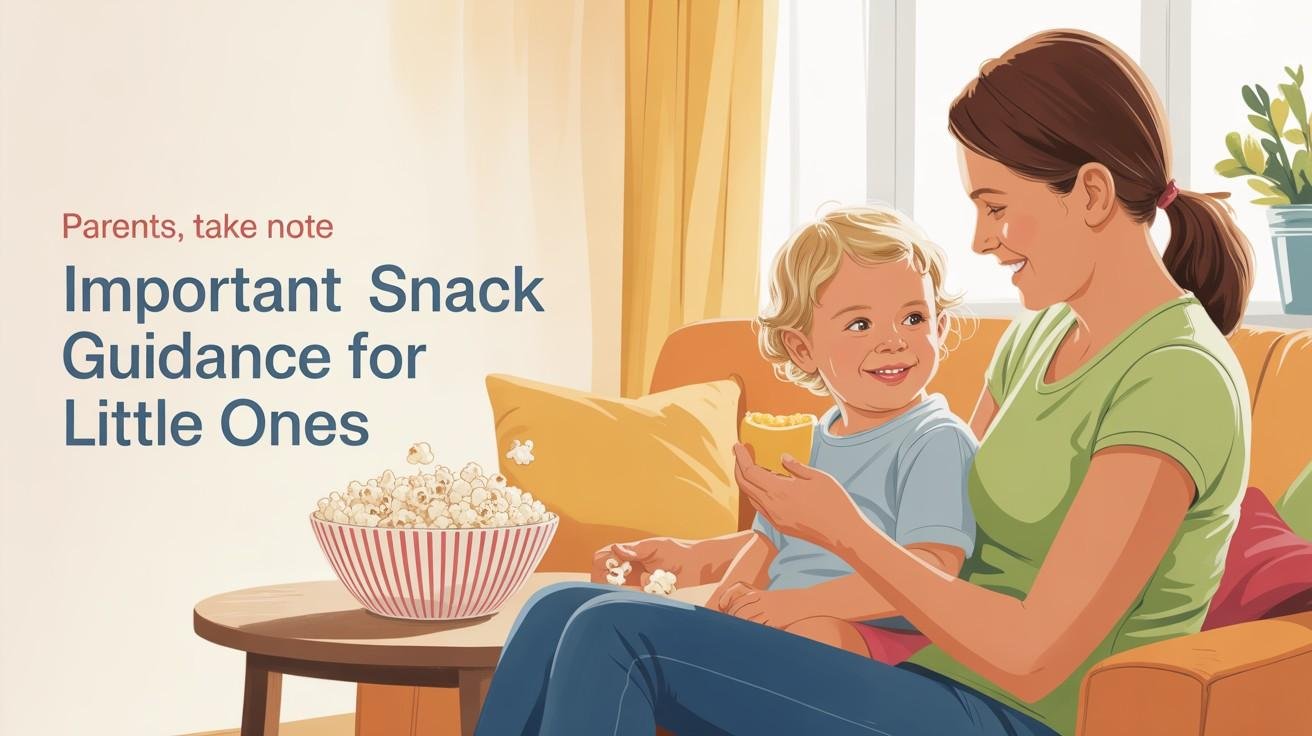
When planning a cozy family movie night, it’s tempting to grab a bowl of popcorn as a quick and yummy snack for the kids. However, experts strongly advise parents to think twice before serving this popular food to children under age 4. While it may seem harmless, popcorn can be a risky snack for little ones who haven’t yet developed the ability to chew properly or handle hard textures. The American Academy of Pediatrics warns that popcorn kernels can easily become a choking hazard, especially for toddlers who are still learning to chew and swallow safely.
From personal experience as a parent, I’ve learned how easy it is to overlook these risks during a fun movie night. But after hearing a pediatrician explain the dangers, I realized that skipping popcorn for younger kids isn’t overprotective — it’s smart parenting. Below, we’ll explore why popcorn poses such a serious risk, how developmental readiness matters, and safe, healthy alternatives that keep snack time fun without worry.
The Hidden Dangers of Popcorn for Young Children
Popcorn might look harmless, but for toddlers and babies, it’s a potential choking hazard waiting to happen because small children have tiny airways, and even a small kernel can cause an obstruction that blocks breathing. The American Academy of Pediatrics lists popcorn among the most dangerous choking hazards for kids under four, alongside hard candies, nuts, and grapes. At this age, children still lack the necessary molars to grind hard foods effectively, which makes swallowing popcorn especially risky.
Parents should understand that choking accidents often occur suddenly — even when children are sitting quietly at the dinner table or during movie night. In my own household, I once witnessed how quickly a single popcorn kernel can lead to panic. Thankfully, supervision and a quick response prevented disaster, but it was a stark reminder. Pediatricians emphasize awareness, supervision, and avoidance of popcorn until a child has developed proper chewing and swallowing skills.
Key Safety Reminders:
- Always avoid giving popcorn to kids under age four.
- Never allow toddlers to eat while walking, running, or playing.
- Stay within reach during snack time to respond quickly if choking occurs.
- Learn basic first-aid and Heimlich techniques for emergencies.
- Choose soft, age-appropriate snacks instead.
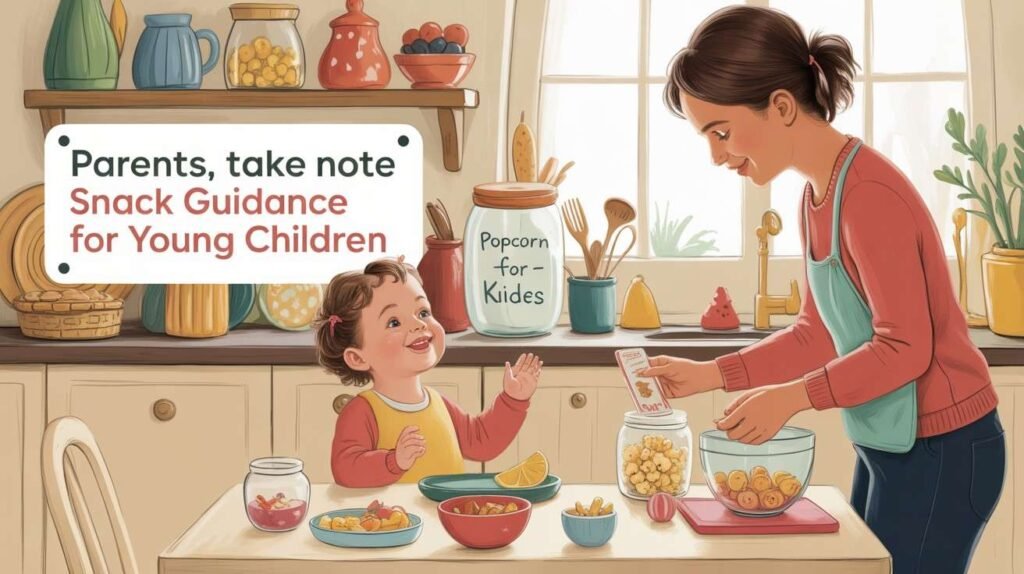
Understanding Why Popcorn Is Hard to Chew for Kids
It’s not just about the risk — it’s about development. Children under four are still strengthening their oral motor skills, which include chewing, grinding, and swallowing properly. They lack molars, the flat teeth at the back of the mouth designed to grind hard textures like popcorn kernels. Even if a toddler looks confident eating solids, they may not yet have the jaw coordination or tongue control to handle something as tough as popcorn.
Pediatricians often describe this stage as a “learning milestone.” Until motor development improves, parents should be patient and watchful. Chewing readiness depends not only on age but also on maturity — some children develop faster than others. A pediatrician’s observation can help determine when your child is physically ready to handle harder foods safely.
In simple terms:
- Toddlers still lack fully developed molars and jaw strength.
- Hard kernels can get trapped between teeth or inhaled.
- Chewing coordination takes time to develop properly.
- Parents should avoid challenging textures until confident in a child’s progress.
- Always observe your child’s chewing and swallowing habits.
Healthy Snack Alternatives Every Parent Should Try
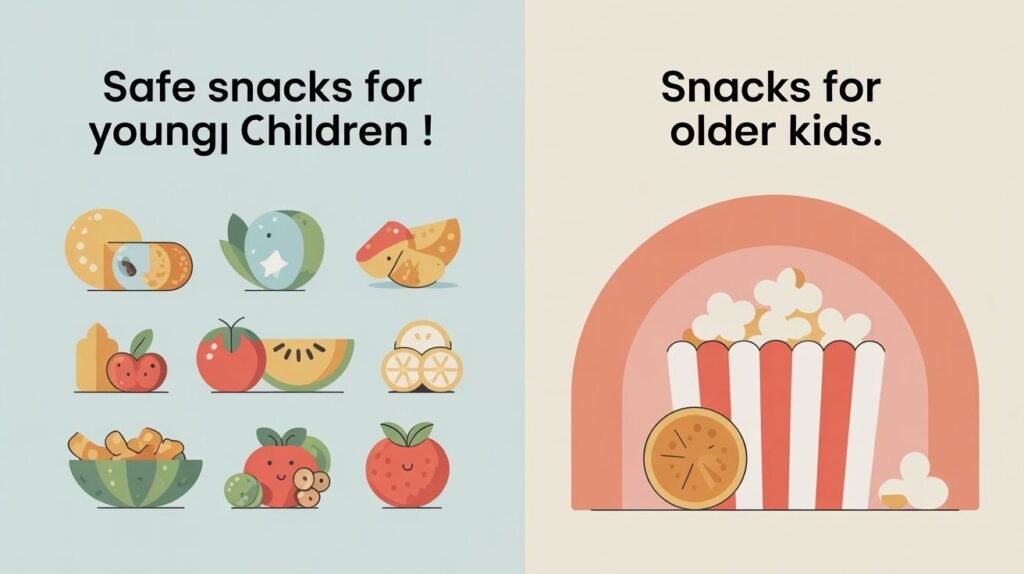
When you have to skip popcorn, it doesn’t mean saying goodbye to fun snacks. There are plenty of safe, healthy alternatives that kids will love. Try light, nutritious options such as Cheerios, puffs, edamame, cheese cubes, or apple slices with peanut butter. These snacks are easy for toddlers to chew and swallow, making them ideal for family snack time or school lunches.
Offering variety keeps kids excited about food while promoting balanced nutrition. Mix and match different textures, colors, and flavors to make snack time more engaging. In my experience, when snacks are fun to look at and easy to handle, even the pickiest eaters enjoy them!
Try These Safe Snack Ideas:
- Cheerios or rice puffs for crunchy fun.
- Crackers and cheese for calcium and protein.
- Pita chips with hummus for a flavorful, filling option.
- Apple or cucumber slices for natural sweetness and hydration.
- Peanut butter pretzels for a mix of crunch and nutrition.
Expert Tips for Safe Snacking and Mealtime Habits
Pediatricians and nutrition experts agree that snack time should be structured and supervised. Children thrive when there are consistent food habits, mealtime routines, and clear boundaries. Parents can reduce risk by modeling mindful eating — showing kids how to chew slowly, take small bites, and focus on the food rather than distractions like screens or toys.
From my experience, creating a calm environment makes a huge difference. When my child eats while watching cartoons, they often rush and swallow too quickly. Now, we have a “no screen during meals” rule, and it has transformed snack time. It’s not only safer but also more bonding.
Practical Expert Advice:
- Encourage slow chewing and mindful eating.
- Avoid serving snacks during playtime or while walking.
- Stick to a routine for snacks and meals.
- Offer age-appropriate portions to prevent overeating.
- Set a positive example by following the same habits.
When and How to Introduce Popcorn Safely
Once your child turns four (and shows signs of developmental readiness), you can begin introducing popcorn — but do it carefully. Always start with plain, air-popped popcorn without butter, salt, or caramel coatings. Avoid flavored toppings that add stickiness or extra hardness, increasing the choking risk. Offer only a small portion and sit with your child while they eat.
The American Academy of Pediatrics recommends parental supervision during every snack session. You can also use this as a teaching opportunity. Show your child how to chew slowly, take small bites, and never talk or laugh while eating. This builds awareness, helps them recognize their limits, and keeps snack time safe and enjoyable.
Safe Introduction Tips:
- Wait until your child is at least four years old.
- Use air-popped popcorn with minimal seasoning.
- Remove unpopped kernels before serving.
- Supervise closely during snack time.
- Teach proper chewing and swallowing habits.
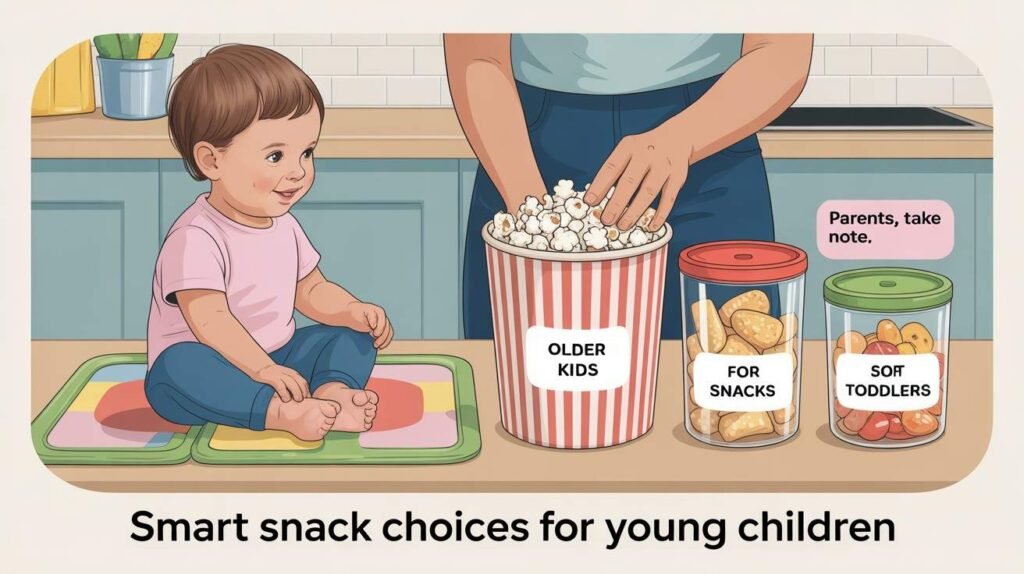
When Can Kids Eat Popcorn?
Most experts agree that popcorn shouldn’t be introduced until a child reaches age four or older. The American Academy of Pediatrics advises parents to consider their child’s maturity, development level, and ability to chew properly. Some children might even need more time.
Parents should remember that each child develops differently. If your child still struggles with hard foods like carrots or nuts, they’re not ready for popcorn yet. Patience now can prevent serious choking hazards later.
Checklist for Readiness:
- Fully developed molars.
- Strong chewing coordination.
- Ability to follow mealtime rules.
- Calm, focused eating behavior.
- No rushing or swallowing whole pieces.
Benefits of Eating Popcorn (for Older Kids and Adults)
Once your kids are old enough, popcorn can actually be a healthy snack. It’s a whole grain high in fiber, which supports digestion and keeps kids regular. It’s also rich in antioxidants that promote brain and eye development and protect the body from disease.
Of course, preparation matters. Skip the butter, salt, or added sugar that turn popcorn into junk food. Choose air-popped popcorn for a nutrient-rich, low-calorie snack that satisfies cravings without guilt.
Quick Tips for Healthy Popcorn:
- Use an air popper instead of oil.
- Add flavor with herbs or nutritional yeast instead of salt.
- Serve in small portions to maintain balance.
- Combine with nuts or fruit for a fiber boost.
Safety Tips for Kids Eating Popcorn
Even after age four, parents should remain cautious. Popcorn contains hard kernels that can hide in soft pieces and still pose a choking hazard. Always watch younger kids when they eat and remove any unpopped kernels. Keep toppings simple — no nuts, caramel, or sticky sauces that make chewing harder.
I personally make it a rule that popcorn isn’t eaten during movie time. When kids are distracted, they don’t chew properly, which increases the risk. Instead, we enjoy it afterward as a special treat.
Popcorn Safety Checklist:
- Supervise every time your child eats popcorn.
- Stick to plain, air-popped popcorn.
- Check for kernels before serving.
- Teach kids to chew slowly and focus on eating.
- Avoid toppings that are sticky or hard.
Snack Alternatives to Popcorn
If your children are too young for popcorn, there’s no shortage of fun, crunchy snacks they can enjoy safely. Many healthy alternatives provide the same satisfaction without the danger. Cheerios, rice cakes, edamame, or pita chips are great choices that fit into a balanced diet.
You can even create a “snack platter” at home with a variety of bite-sized foods like fruit, veggies, or cheese cubes. Making snack time interactive helps kids explore textures, flavors, and healthy food habits from an early age.
Kid-Friendly Snack Options:
- Cheerios and rice puffs.
- Graham crackers with peanut butter.
- Pita chips and hummus.
- Cucumber slices and cheese sticks.
- Apple slices with yogurt dip.
FAQs
1. Why is popcorn unsafe for children under 4?
Popcorn is a choking hazard for young children because they don’t have all their molars to chew it properly. Its hard kernels and uneven texture can easily get stuck in small airways, making it difficult for toddlers to swallow safely. Experts, including the American Academy of Pediatrics, recommend avoiding popcorn until kids are at least 4 years old.
2. What age can my child safely eat popcorn?
Most pediatricians suggest waiting until your child is 4 years old or older before serving popcorn. Even then, make sure your child can chew properly, sit still while eating, and follow safety rules at the table. Some children might need more time depending on their development and maturity level.
3. What makes popcorn a choking hazard for kids?
Popcorn’s hard, sharp kernels can get lodged in a child’s throat or airway. The half-popped pieces are particularly risky. Since toddlers are still developing chewing and swallowing skills, they’re not ready to handle tough textures or recognize when to stop eating if something feels stuck.
4. Can I make popcorn safer by cutting or blending it?
Unfortunately, no. Even crushed or blended popcorn can leave behind tiny kernels and hard pieces that are still unsafe for small children. It’s better to wait until your child’s chewing muscles and molars are strong enough for solid foods like popcorn.
5. What are some healthy snack alternatives to popcorn for toddlers?
There are plenty of safe, kid-friendly snacks that still give that fun, crunchy feel! Try Cheerios, pita chips, edamame, rice cakes, apple slices with peanut butter, or crackers and cheese. These are easy to chew, nutritious, and just as enjoyable for little hands.
6. What should I do if my child chokes on popcorn?
Stay calm and act fast. If your child is coughing, encourage them to keep coughing to clear their airway. If they cannot breathe or make a sound, perform the Heimlich maneuver (for their age) and call emergency services immediately. It’s a good idea for all parents to learn basic choking first aid.
7. Is it okay to give popcorn to older siblings while younger ones are around?
It’s fine, but use caution. Younger children may want to copy older siblings and grab popcorn pieces. Always serve separately, supervise closely, and remind older kids why their younger sibling can’t have popcorn yet — this helps teach awareness and empathy.
8. How can I teach my child to chew food properly?
Encourage slow eating and small bites during meals. Avoid letting your child eat while running, talking, or watching TV. Offer soft, age-appropriate foods to practice chewing safely, and model good habits yourself — kids learn best by watching their parents.
9. Can older kids eat flavored popcorn safely?
Yes, but in moderation. Older children who can chew well can enjoy air-popped popcorn with light seasoning. Avoid sticky toppings like caramel or hard coatings that make chewing more difficult and increase choking risks. Keep it simple and supervise if younger kids are nearby.